Website launch checklists should address a specific problem. A finished visual design is treated as proof that the site is ready for customers. A useful brief identifies the decision to make and the evidence needed to assess it.
Plan website launch checklists around the task
Verify practical journeys, search settings and operational responsibilities before launch. For business and ecommerce teams, the brief should explain what will be different for the person using or maintaining the website.
A realistic planning example
A launch review checks a real enquiry route and missing-page response instead of stopping at a homepage screenshot. Treat this as an illustrative scenario. The right response still depends on the audience, constraints and evidence available for your own project.
A practical review sequence
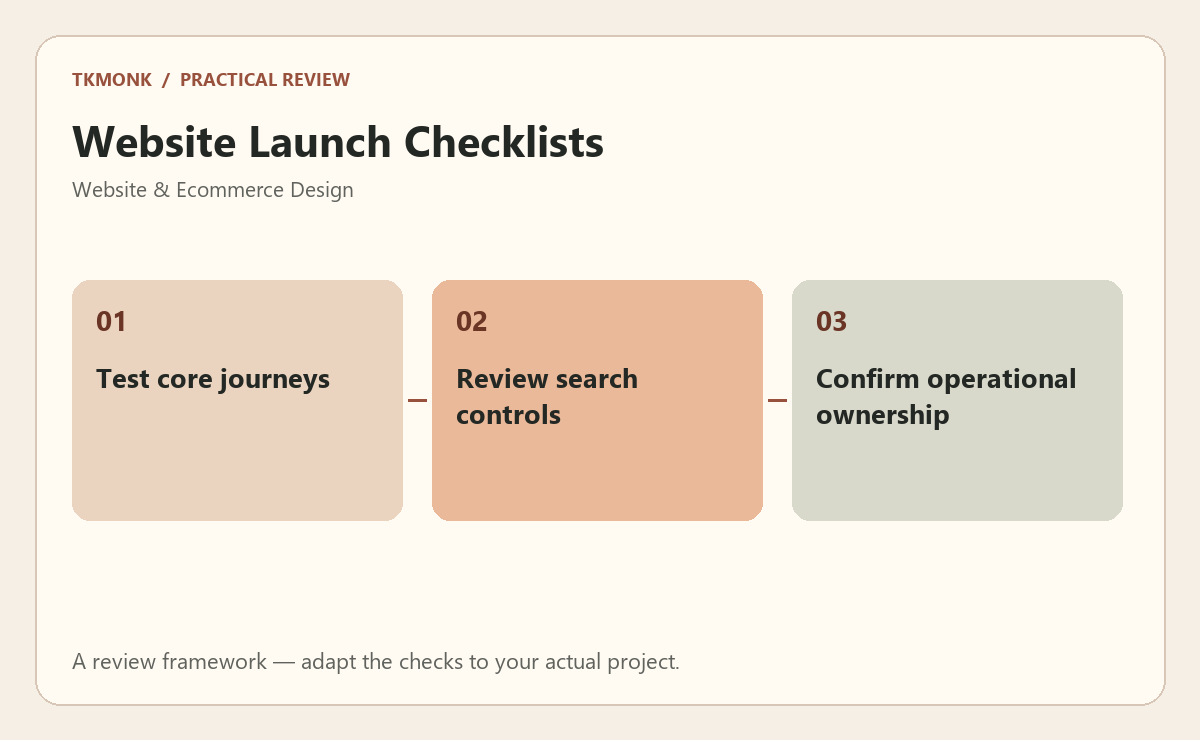
- Test core journeys. Keep the decision and its reason together. This makes later changes easier to assess rather than repeating the original debate.
- Review search controls. Confirm the relevant constraint with the person responsible for delivery instead of assuming that the mockup proves it.
- Confirm operational ownership. Review this in context with the surrounding information. An isolated component may behave differently in the complete journey.
Check website launch checklists before approval
Use an annotated page with realistic content to make the decision visible. Review the page on a phone as well as a desktop. Use real product names, longer headings and representative customer information. Ask a reviewer to explain what the business offers and what they would do next. Record the answer rather than assuming the intended hierarchy is obvious.
A common mistake to avoid
Do not replace missing information with decorative badges or broad promises. The visitor needs an understandable offer, relevant evidence and a working next step. Visual polish should make those elements easier to evaluate, not push them farther down the page.
Your next step
For website launch checklists, keep the review tied to the original problem. Use the website design brief guide to prepare the wider brief, or explore responsive website design if you need help defining the work.
Further reading: Images tutorial and Typography guide. These resources provide broader background; adapt the practical review to your specific situation.