Data visualization motion should address a specific problem. Animated charts imply change or certainty that the underlying data does not support. A useful brief identifies the decision to make and the evidence needed to assess it.

Plan data visualization motion around the task
Use motion only when it helps explain a real transition and keep labels understandable. For design and production teams, the brief should explain what will be different for the person using or maintaining the motion sequence.
A realistic planning example
A dashboard distinguishes a genuine period comparison from a decorative count-up on first load. Treat this as an illustrative scenario. The right response still depends on the audience, constraints and evidence available for your own project.
A practical review sequence
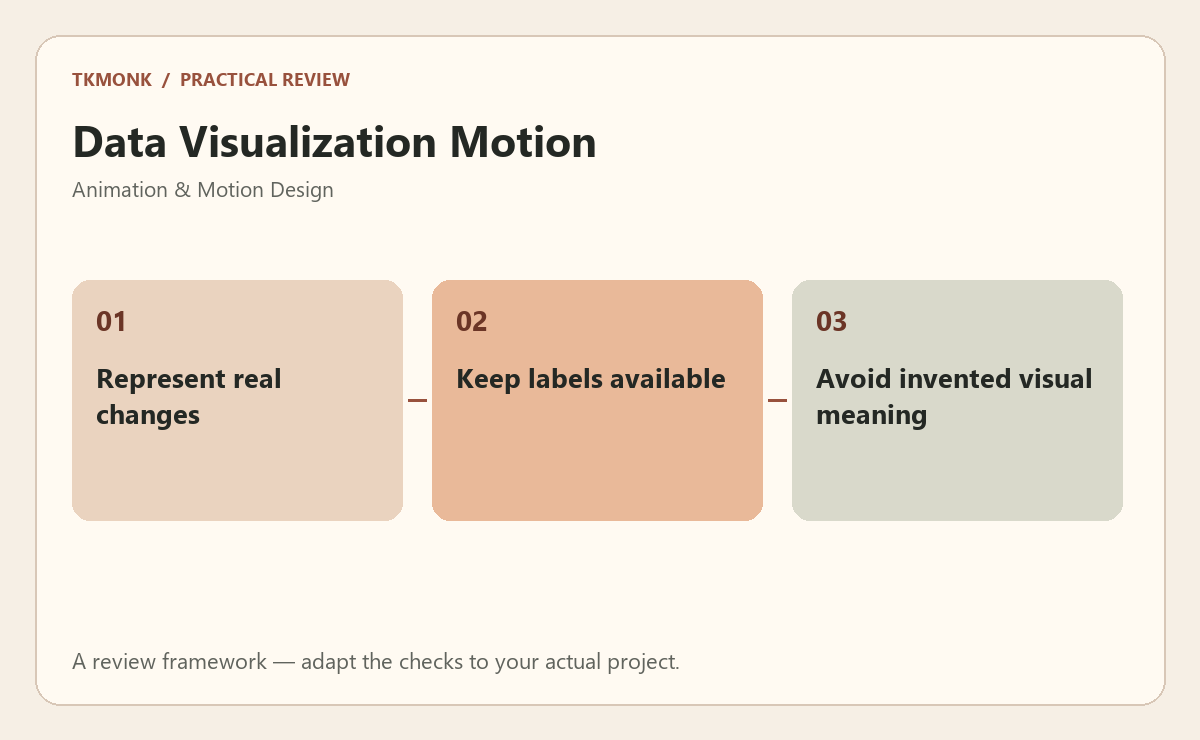
- Represent real changes. Make the acceptance question specific enough that another person can repeat the review without guessing.
- Keep labels available. Keep the decision and its reason together. This makes later changes easier to assess rather than repeating the original debate.
- Avoid invented visual meaning. Confirm the relevant constraint with the person responsible for delivery instead of assuming that the mockup proves it.
Check data visualization motion before approval
Use a rough storyboard or short preview to make the decision visible. Review the sequence in its intended placement rather than only inside the production application. Check whether the message is still understandable with less movement or without sound where relevant. Use the actual delivery dimensions and inspect the beginning, ending and transitions rather than approving one attractive frame.
A common mistake to avoid
Avoid equating movement with clarity. An effect can look smooth while delaying a task, hiding text or overstating a result. Keep the static information useful and agree which parts of the production are essential before spending time on decorative detail.
Your next step
For data visualization motion, keep the review tied to the original problem. Use the website animation guide to prepare the wider brief, or explore animation design services if you need help defining the work.
Further reading: Media accessibility and Motion preference. These resources provide broader background; adapt the practical review to your specific situation.