Digital PR resources should address a specific problem. A campaign pitches a generic article without a distinctive resource or observation. A useful brief identifies the decision to make and the evidence needed to assess it.

Plan digital PR resources around the task
Develop a useful artifact that others can assess and cite on its own merits. For business owners and marketing teams, the brief should explain what will be different for the person using or maintaining the marketing decision.
A realistic planning example
A studio shares an original checklist or documented project method rather than inventing survey results to attract coverage. Treat this as an illustrative scenario. The right response still depends on the audience, constraints and evidence available for your own project.
A practical review sequence
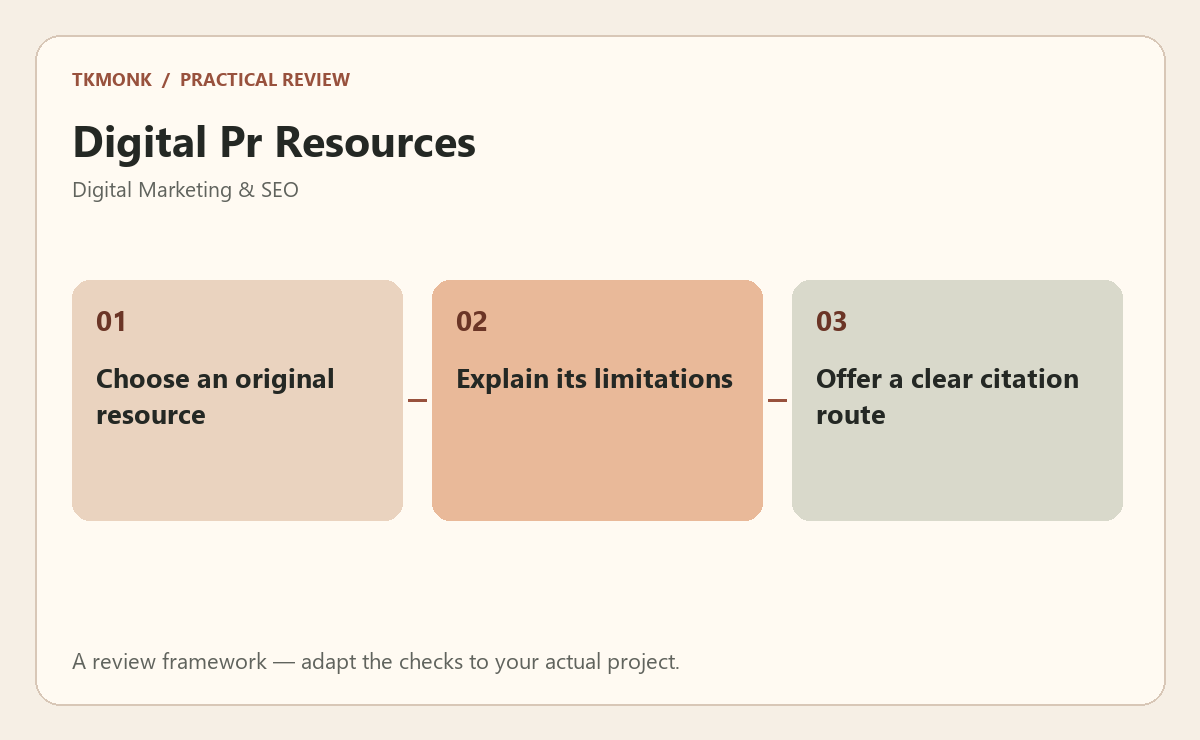
- Choose an original resource. Compare the intended behavior with the actual output. Record any exception that changes what the reader or user can expect.
- Explain its limitations. Agree who owns this check and what evidence is needed before the work can be considered ready.
- Offer a clear citation route. Use realistic material instead of an idealized placeholder, then note anything that becomes unclear.
Check digital PR resources before approval
Use a short evidence sheet with the current baseline to make the decision visible. Separate observed results from assumptions. Check the actual page, relevant account data and the business outcome being measured. Compare suitable periods and note other changes that may affect interpretation. Where evidence is unavailable, record the gap instead of inventing a volume, ranking or conversion figure.
A common mistake to avoid
Avoid confusing visibility with a qualified business result. More pages, links or impressions do not by themselves establish useful growth. Keep the work connected to the audience and offer, and revise the plan when actual evidence contradicts the original assumption.
Your next step
For digital PR resources, keep the review tied to the original problem. Use the enquiry measurement guide to prepare the wider brief, or explore search marketing services if you need help defining the work.
Further reading: Canonical guidance and Spam policies. These resources provide broader background; adapt the practical review to your specific situation.