Brand asset libraries should address a specific problem. Teams recreate files because the approved source is difficult to locate. A useful brief identifies the decision to make and the evidence needed to assess it.

Plan brand asset libraries around the task
Organize assets by purpose and clearly distinguish current versions from archived work. For brand and marketing teams, the brief should explain what will be different for the person using or maintaining the identity system.
A realistic planning example
A partner can find the approved logo and presentation template without browsing a folder of draft experiments. Treat this as an illustrative scenario. The right response still depends on the audience, constraints and evidence available for your own project.
A practical review sequence
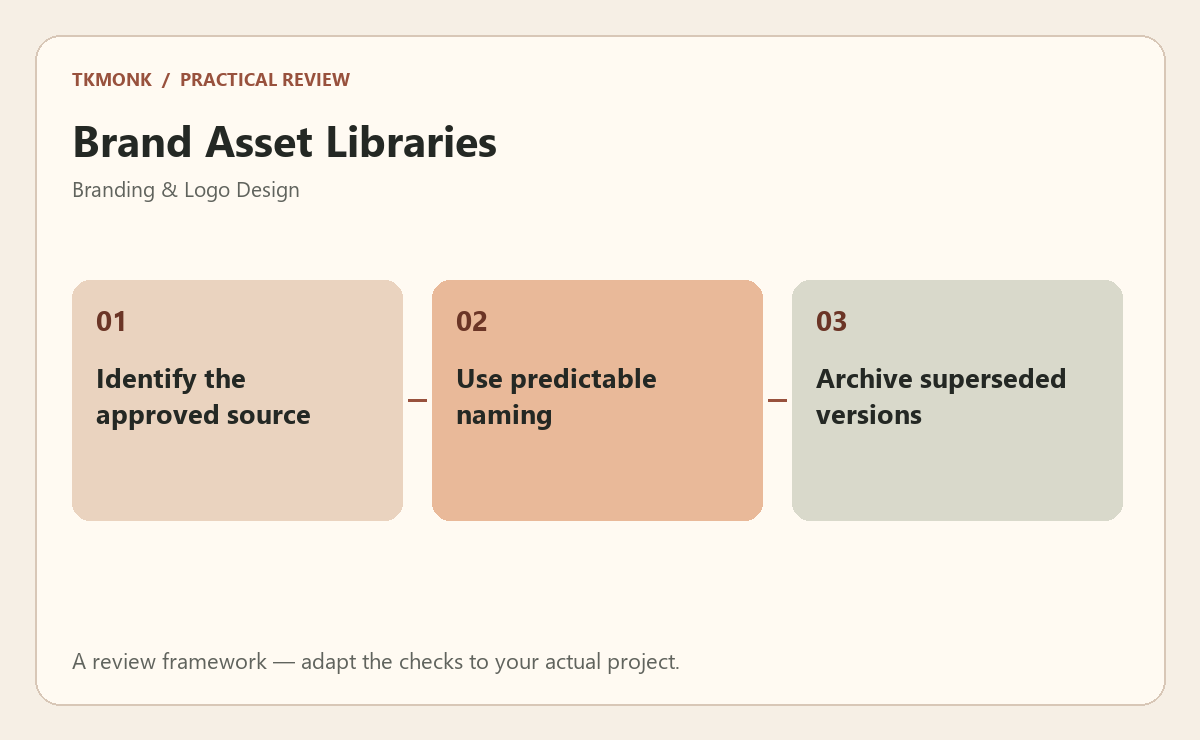
- Identify the approved source. Review this in context with the surrounding information. An isolated component may behave differently in the complete journey.
- Use predictable naming. Retain a brief record of the approved choice and any remaining limitation so handoff does not turn uncertainty into a promise.
- Archive superseded versions. Write down what a reviewer should be able to confirm, and keep a concrete example beside the requirement.
Check brand asset libraries before approval
Use a small set of actual brand applications to make the decision visible. Check the work in the formats people will actually use. A large presentation mockup can hide problems that appear in a small header, printed label or editable document. Ask the person maintaining the material to use the supplied rules and note where the guidance is incomplete.
A common mistake to avoid
Avoid approving an identity only because one hero mockup looks impressive. Review ordinary working materials and difficult content too. Keep claims about ownership, licensing and production capability tied to confirmed information from the appropriate supplier or adviser.
Your next step
For brand asset libraries, keep the review tied to the original problem. Use the brand identity guide to prepare the wider brief, or explore custom logo design if you need help defining the work.
Further reading: Contrast guidance and Heading guidance. These resources provide broader background; adapt the practical review to your specific situation.